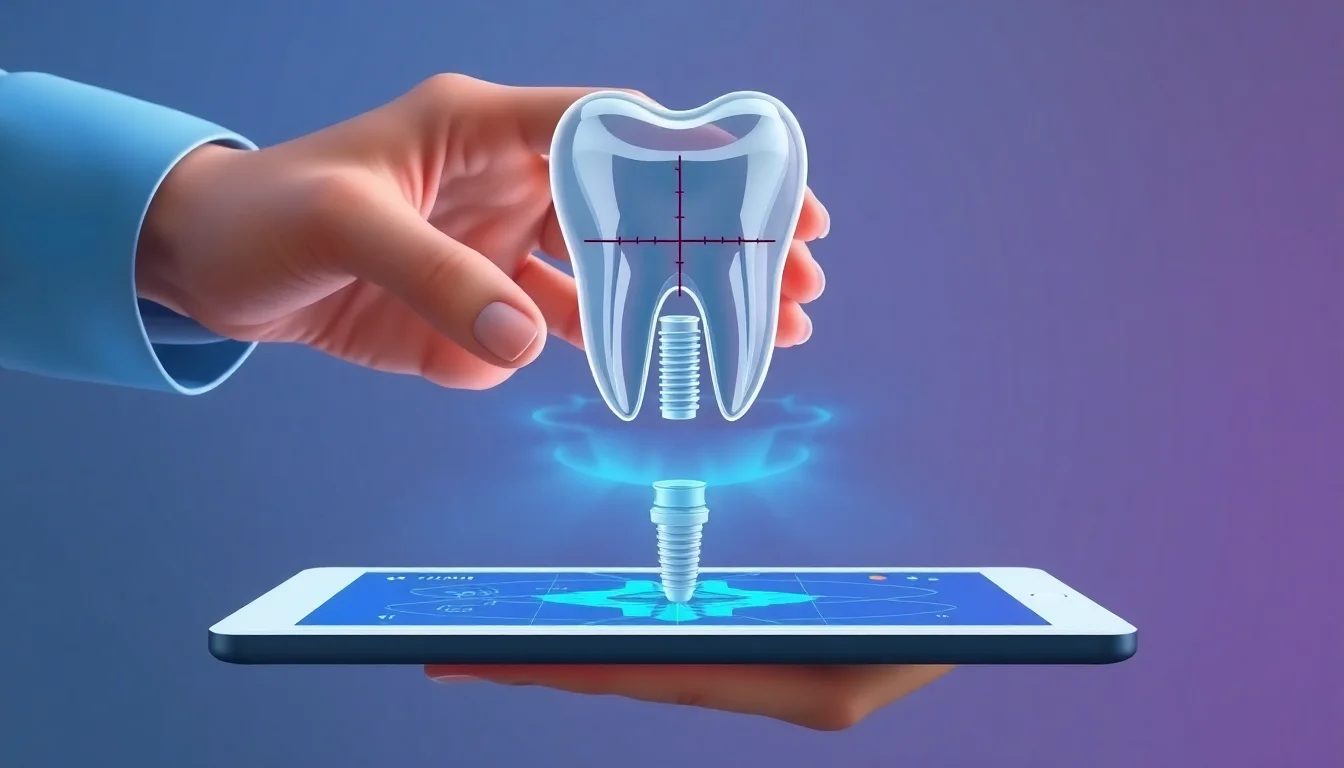
Guided Dental Implant Surgery Explained: How 3D Planning Makes Implants Safer and More Precise in 2026
Guided dental implant surgery uses 3D cone-beam CT scans. Digital planning software maps the exact implant position before surgery. A custom surgical guide is printed and placed in the mouth during the procedure. It directs the drill to within 1 millimeter of the planned site. This significantly reduces nerve risk and improves long-term outcomes.
How Guided Dental Implant Surgery Works
A cone-beam CT scan captures a complete three-dimensional image. It shows the jaw, bone density, nerve pathways, and sinus anatomy. The scan takes a single low-radiation rotation under 60 seconds. Planning software overlays the scan with bite and gum data. It simulates implant placement virtually before surgery begins. Common software includes Nobel Clinician, Straumann coDiagnostiX, and 3Shape Implant Studio. The dentist selects implant diameter, length, and angulation. This maximizes bone contact and prosthetic aesthetics. The approved digital plan is exported. A drill-guide sleeve is 3D printed or milled, sterilized, and used once. The guide physically restricts drill movement to the pre-planned angle, depth, and position, eliminating guesswork from implant placement. Some guided systems also support flapless surgery, meaning no gum tissue needs to be cut away, which reduces bleeding, swelling, and post-operative discomfort. Studies using 3D-printed surgical guides for endodontic microsurgery report success rates reaching up to 89% (nature.com), a figure that reflects the precision gains possible when digital fabrication replaces manual estimation.
What Is a CBCT Scan and Why It Is Essential
CBCT stands for cone-beam computed tomography. It produces a three-dimensional image of bone, teeth, sinuses, and the inferior alveolar nerve in a single rotation. Radiation exposure from dental CBCT is significantly lower than medical CT. It typically ranges from 40 to 135 microsieverts depending on field of view. In a review of 546 CBCT referral cases, implant site assessment was the most recorded reason at 46.7% (annalsofdentalspecialty.net.in). Root proximity evaluation accounted for 13.2% (annalsofdentalspecialty.net.in) of referrals. Most evaluations involved a narrow field of view (54.6% (annalsofdentalspecialty.net.in)), keeping radiation exposure minimal. Without CBCT, a dentist must estimate bone depth and nerve location from a flat 2D X-ray, which introduces risks that 3D imaging eliminates entirely.
How the Surgical Guide Is Made and Used
Once CBCT data is imported into planning software, the dentist builds a virtual jaw model. Each implant is positioned digitally. This step catches potential problems before the patient is in the chair. Problems include proximity to the inferior alveolar nerve or insufficient bone width. The finalized plan is exported to a 3D printer or milling unit, producing a stereolithographic (SLA) guide with metal sleeves that channel the surgical drill to the exact pre-planned coordinates. The guide fits over the patient's existing teeth or gums, depending on the case. At Renov Dental Group, we perform CBCT scans in-house in Claremont, which means the scan-to-guide workflow happens without outside referrals, cutting days off the preparation timeline. Each guide is fabricated for single use, then sterilized and discarded after surgery to prevent cross-contamination. At Renov Dental Group, we perform CBCT scans in-house in Claremont, which means the scan-to-guide workflow happens without outside referrals, cutting days off the preparation timeline.
Why Guided Surgery Produces Better Outcomes Than Freehand Techniques
Freehand implant placement relies on the surgeon's tactile judgment. Peer-reviewed literature links this to angular deviations of 5 to 10 degrees. Tip deviations range from 1 to 4 millimeters. Guided surgery reduces mean angular deviation to under 3 degrees and tip deviation to under 1.5 millimeters. Precision matters here. A 2-millimeter positioning error near the maxillary sinus or inferior alveolar nerve can cause post-operative numbness, sinus perforation, or implant failure. Guided placement keeps each implant a planned safety margin away from these structures. Long-term outcome data shows that [dental implants placed](/ dental-implant-cost-claremont-ca-2026) with careful planning carry an overall cumulative survival rate of 97.9% over 10 years (jpis.org), with only 2.0% of implants failing over that period. Those figures depend on correct positioning, which is precisely what guided surgery delivers. CBCT measurement reliability for planning purposes has been validated with Cronbach's alpha above 0.90 and statistical significance at P < 0.001 (ejomr.org), confirming that the measurements feeding into digital plans are highly reproducible.
Flapless guided surgery produces clinically meaningful soft-tissue benefits beyond precision alone. Because the drill enters through a small punch rather than a full incision, bone trauma is minimized, infection risk drops, and soft tissue heals faster. Patients often report less post-operative swelling and return to normal eating sooner than after open-flap procedures. The trade-off is that flapless surgery requires sufficient bone volume confirmed by CBCT; cases with very thin ridges still require a small flap for visibility. Contraindications to guided implant surgery include severe bone loss requiring extensive grafting before implant placement, uncontrolled systemic conditions such as unmanaged diabetes or active bisphosphonate therapy, and cases where bone anatomy cannot be clearly resolved on CBCT due to significant metal artifact. These patients are not excluded from implants but need additional preparatory treatment before guided placement is appropriate.
AI-Powered Planning and Passive-Fit Restorations
AI-powered implant planning software displays CBCT data and analyzes bone density maps. It flags regions of low trabecular density that compromise osseointegration. It suggests implant diameters and lengths calibrated to available bone volume. This pre-surgical risk stratification identifies complications in the planning session. They no longer appear intraoperatively. The clinical consequence is that implants match their planned positions with the accuracy needed for passive-fit restorations. A passive fit means the final crown, bridge, or denture seats without mechanical stress on the implant interface. Stress at that interface accelerates bone loss and increases failure risk. When guided surgery delivers implants at the correct prosthetic angle, the laboratory can fabricate the final restoration from the digital plan rather than from a post-surgical impression, which shortens turnaround time and improves fit. Same-day full-arch rehabilitations like All-on-4 implants are now feasible precisely because the guided workflow guarantees parallel implant angulation from the start, allowing a pre-fabricated provisional prosthesis to be seated the same day the implants are placed.
Who Benefits Most from Guided Implant Surgery
Patients replacing multiple adjacent teeth benefit most because cumulative angulation errors compound across implants. Cases near the maxillary sinus or inferior alveolar nerve demand guided precision because a small deviation creates serious complications. Full-arch restoration candidates, including those considering All-on-4 or implant-supported dentures, require parallel implant placement that only a guide can reliably deliver. Patients with dental anxiety also benefit. Shorter, more predictable surgical appointments reduce chair time and stress. Consider a Claremont resident replacing four upper teeth lost to periodontal disease. Freehand surgery in that case would require the surgeon to navigate bone that narrows near the sinus. Guided surgery pre-maps every millimeter, converts a high-risk procedure into a methodical one, and allows a same-day provisional restoration so the patient leaves with teeth.
What Patients Should Expect: Cost, Timeline, and Questions to Ask
This is not a luxury markup. It is the cost of eliminating the most common sources of implant failure. The planning phase adds one to two weeks before surgery but reduces intraoperative time because the guide removes exploratory steps. Total treatment from scan to final crown generally spans three to six months, primarily waiting for osseointegration rather than surgical planning. Practices offering same-day or next-day provisional crowns use a workflow called immediate provisionalization, which is only feasible with the angular accuracy that guided surgery provides. Patients should confirm whether the practice owns its CBCT unit in-house, since in-house scanning eliminates the referral delay. In our experience at Renov Dental Group, having in-house CBCT capability allows us to move patients from imaging to surgical planning within days rather than weeks, significantly improving the overall treatment experience. They should also verify that the surgical guide is fabricated from an FDA-cleared design process and that the software is compatible with the chosen implant brand. Implant systems vary in their drill protocol requirements, and a mismatched guide can undermine the precision the system was designed to deliver.
Questions to Ask Your Dentist Before Guided Implant Surgery
Before committing to guided implant surgery, ask these specific questions. Which planning software and implant brand will be used, and are they protocol-compatible? Is the CBCT scan performed in this office or referred to an external imaging center? Will surgery be fully guided, partially guided, or freehand, and what is the clinical rationale? Is flapless surgery an option given my bone volume? What happens if the guide does not seat correctly on surgery day? These questions distinguish practices that use guided technology as a marketing term from those that have built a complete digital treatment planning workflow around it. Results speak for themselves. At Renov Dental Group in Claremont, every implant case begins with an in-house CBCT and ends with a confirmed surgical guide before the patient is ever scheduled for surgery.
Frequently Asked Questions
Is guided dental implant surgery safe, and what are the risks?
How much more does guided implant surgery cost compared to traditional placement?
Does guided implant surgery work for full-arch restorations like All-on-4?
How do I know if my dentist is qualified to perform guided implant surgery?
Can guided surgery reduce implant recovery time?
How does AI-powered implant planning improve the accuracy of dental implants?
What are the benefits of using 3D printing in dental implant surgery?
How does CBCT imaging enhance the safety of dental implant procedures?
What makes guided dental surgery more predictable than traditional methods?
How does a custom surgical guide contribute to the success of dental implants?
Sources & References
- Annals of Dental Specialty | CBCT Referral Patterns Study[peer-reviewed]
- JOMR | CBCT Validation Study on Intraclass Correlation for Linear Measurements in Peri-implantitis[peer-reviewed]
- New-designed 3D printed surgical guide promotes the accuracy of endodontic microsurgery: a study of 14 upper anterior teeth[peer-reviewed]
- Journal of Periodontal & Implant Science | 10-Year Implant Cumulative Survival Rate Study[peer-reviewed]
About the Author
Renov Dental Group
Renov Dental Group is Claremont's comprehensive dental practice offering advanced guided implant surgery, cosmetic dentistry, and family care with 3D digital planning and same-day treatment capabilities.
Related Posts

Teeth Whitening Options Compared: In-Office Treatment vs At-Home Kits vs Whitening Toothpaste
Not all teeth whitening methods deliver the same results. This guide compares professional in-office treatments, over-the-counter at-home kits, and whitening toothpastes across cost, effectiveness, safety, and longevity so you can choose the right option for your smile goals.
Family Dentist in Claremont, CA: How to Find One Practice That Treats Kids, Adults, and Seniors
Finding a single dental practice in Claremont, CA that comfortably treats a toddler, a working adult, and a grandparent is harder than it sounds. This guide walks you through exactly what to look for, which services matter most by age group, and how practices like Renov Dental Group are changing what full-family dental care means in the Inland Valley.
Emergency Dentist in Claremont, CA: What to Do and Where to Go for Same-Day Care
A dental emergency can strike without warning, and knowing where to go in Claremont saves time, money, and teeth. This guide covers exactly what to do in the first critical minutes, how to choose the right provider, and why same-day care at a full-service practice beats the ER every time.